Category: Helix Piercing

  • How Long Does A Helix Piercing Take To Heal?

    How Long Does A Helix Piercing Take To Heal?

    Piercing Ya » Helix Piercing

    Join The Piercing Ya Newsletter


    How Long Does A Helix Piercing Take To Heal?

    When considering a helix piercing, one of the most common questions people have is, “How long does a helix piercing take to heal?” It’s an important consideration, as the healing time can impact your care routine and lifestyle choices. A helix, located on the upper cartilage of the ear, requires a good understanding of the healing process to ensure it heals properly and remains healthy.

    Understanding The Helix Piercing Healing Time

    The helix piercing generally takes about 6 to 12 months to fully heal. However, healing times can vary greatly depending on several factors, including your body’s natural healing process, how well you care for the piercing, and your overall health. It’s essential to note that cartilage piercings, like the helix, often take longer to heal compared to soft tissue piercings due to the nature of cartilage tissue, which has less blood supply.

    The Stages Of Healing

    1. Inflammatory Phase: The first few weeks after getting your helix piercing is the initial healing stage. During this period, it’s common to experience redness, swelling, and some discomfort. Proper care during this phase is crucial to prevent infection and ensure a smooth healing process.
    2. Proliferative Phase: This phase involves the actual healing of the wound. The body works to repair the piercing channel, and you might notice the formation of a crust around the jewelry. It’s essential to keep cleaning the piercing as recommended.
    3. Maturation Phase: In this final stage, the helix piercing fully heals, and the tissue around the piercing strengthens and matures. Even if the piercing seems healed, it’s important to continue with proper aftercare to avoid complications.

    Aftercare Tips

    • Clean Regularly: Clean your helix piercing twice a day with a saline solution. Avoid over-cleaning, as it can irritate the piercing.
    • Avoid Touching: Minimize handling the piercing to prevent the introduction of bacteria.
    • Stay Clear of Irritants: Keep hair products, sprays, and lotions away from the piercing site.
    • Be Cautious with Sleeping: Try not to sleep on the side of your new helix to avoid pressure and irritation while it heals.
    • Watch for Signs of Infection: If you notice excessive swelling, redness, or discharge, consult a healthcare professional.

    Patience Is Key

    Patience is vital when it comes to the helix piercing healing time. Rushing the healing process or neglecting proper aftercare can lead to complications, such as infections or piercing bumps. Regular check-ups with your piercer can also help ensure your piercing is healing correctly.
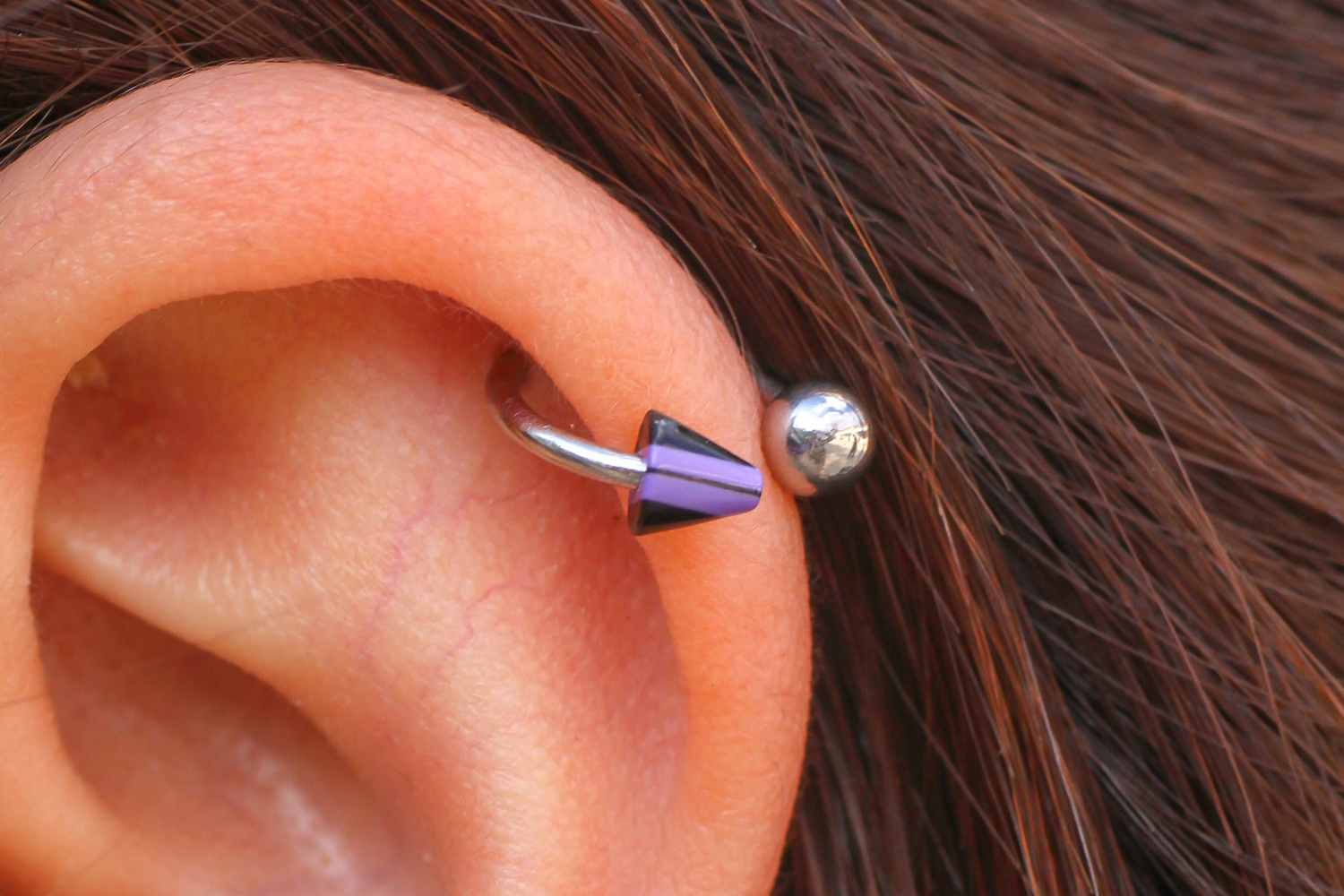
    A healed helix piercing with a circular barbell that has purple spikes.

    In The End

    To put it simply, while a helix piercing can take a significant amount of time to heal fully, understanding and following the right aftercare procedures can lead to a beautifully healed piercing. Remember, every individual’s healing process is different, so listen to your body and give it the time it needs to heal. 

    See our in-depth article with all the details about helix piercings here: Helix Piercing.


    Need to find a piercer? Check out the Association of Professional Piercers.

  • Why Is My Helix Piercing Throbbing?

    Why Is My Helix Piercing Throbbing?

    Piercing Ya » Helix Piercing

    Join The Piercing Ya Newsletter


    Why Is My Helix Piercing Throbbing?

    If you’re wondering, “Why is my helix piercing throbbing?”, you’re not alone. This is a common concern among those who have recently adorned their ears with this stylish form of ear piercing. Understanding why your helix piercing is throbbing and how to address it is key to a healthy and comfortable healing process.

    The Healing Process Helix Throbbing

    Firstly, it’s essential to understand that any piercing is a form of controlled injury to the body. Your helix piercing, located on the upper cartilage of your ear, is no exception. When you get a piercing, your body’s natural response is to heal the wound. This response can lead to swelling, redness, and a throbbing sensation. This is a normal part of the healing process, especially within the first few days or weeks after getting the piercing.

    Infection And Helix Throbbing Pain
    However, if the throbbing is persistent or worsens over time, it could be a sign of infection. Symptoms of an infected helix piercing include severe throbbing pain, increased redness, swelling, warmth at the site, and possibly the discharge of pus. It’s crucial to be table to tell the difference between normal healing throbbing and the throbbing that accompanies infection. If you suspect an infection, it’s important to consult a doctor as soon as possible.

    Irritation And Helix Throbbing
    Another reason for helix piercing throbbing could be irritation. This can be caused by several factors, including allergic reactions to the jewelry material. Also, bad aftercare or trauma to the piercing site can cause an irritation. For instance, sleeping on the pierced ear or using headphones can bother the piercing, leading to more throbbing and pain.

    Proper Aftercare To Reduce Helix Throbbing
    To minimize throbbing and promote healing, proper aftercare is vital. This includes cleaning the piercing with a saline solution twice a day, not touching or twisting the jewelry, and keeping the area dry. It’s also suggested to avoid swimming pools, hot tubs, and other bodies of water that could introduce bacteria to the piercing site.

    A helix piercing that is completely healed with a three ring helix earring in it.

    When To Seek Medical Advice

    Now that you know, why your helix piercing is throbbing, while a throbbing sensation in your helix piercing can be a normal part of the healing process, it’s important to be on the outlook for signs of infection or other problems. If the throbbing is accompanied by severe pain, swelling, redness, or discharge, or if it doesn’t improve with proper aftercare, seeking medical advice is crucial for your health and the well-being of your piercing. Remember, everybody reacts differently to piercings, so listening to yours and taking appropriate action is key.

    See our in-depth article with all the details about helix piercings here: Helix Piercing.


    Need to find a piercer? Check out the Association of Professional Piercers.